
Tag: News from the experiments
-
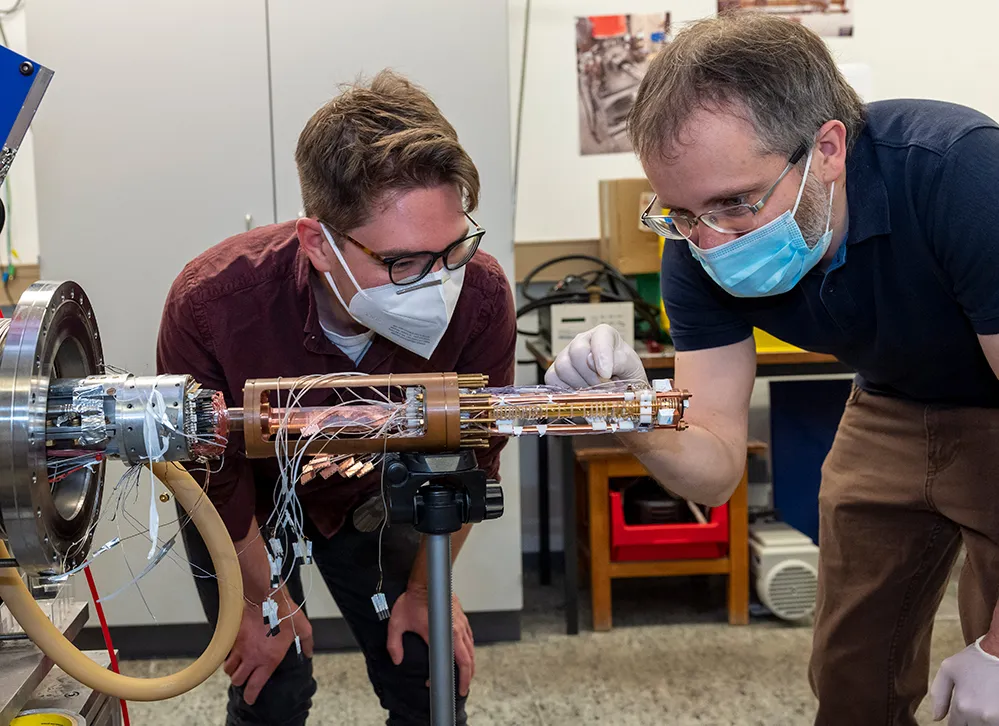
Cooling a particle from a trap away
Cooling a particle from a trap away The BASE experiment, located at CERN’s Antiproton Deccelerator (AD) performs some of the most precise measurements with antimatter in the world – namely measuring the magnetic moment and charge-to-mass ratio of a single trapped antiproton. With these measurements, BASE, along with other experiments at the AD, is attempting
-
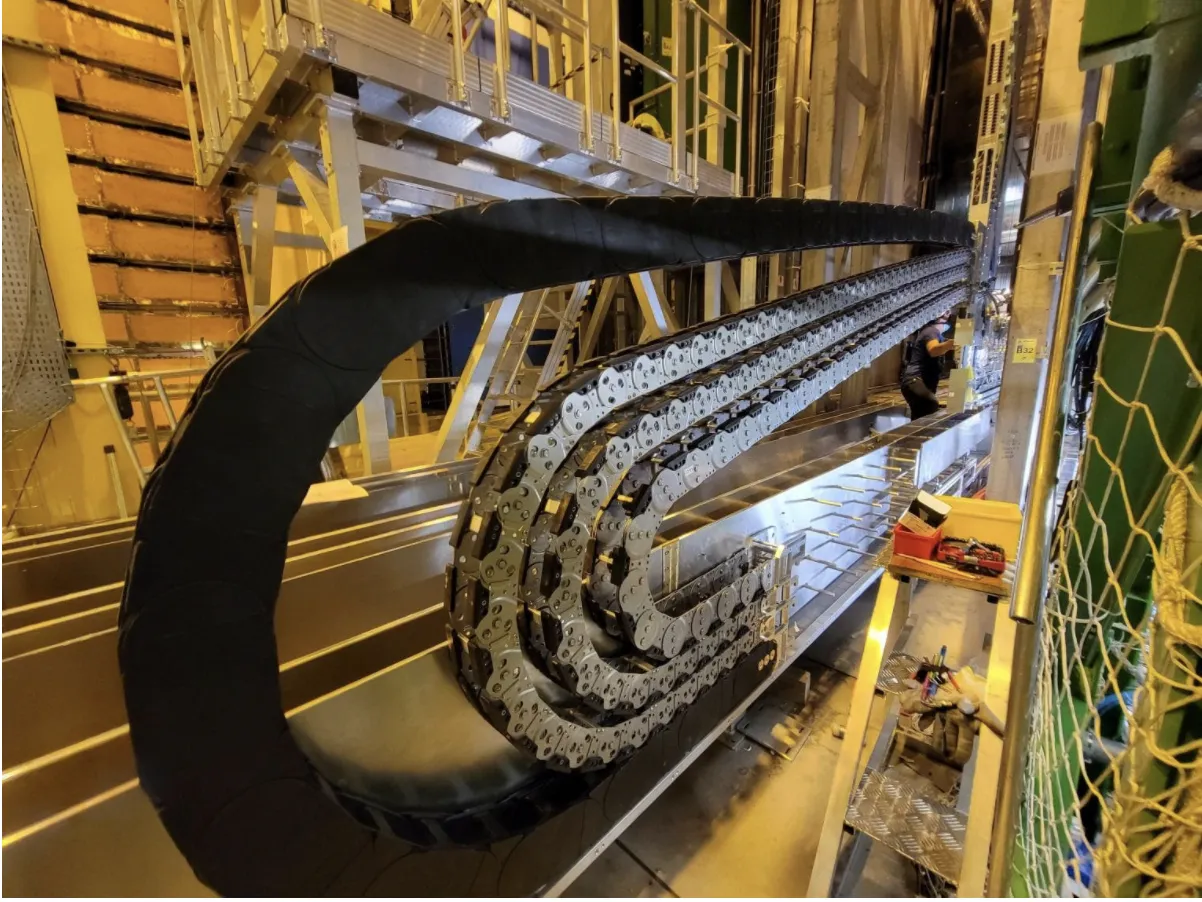
Installation of the critical first half of the LHCb SciFi detector progresses
Installation of the critical first half of the LHCb SciFi detector progresses The LHCb SciFi tracker is the replacement of the Outer Tracker (based on gas straw tubes) and the Inner Tracker (Silicon microstrips) by a single detector technology (see also a previous EP newsletter article and a CERN Courier article). The detector consists of
-
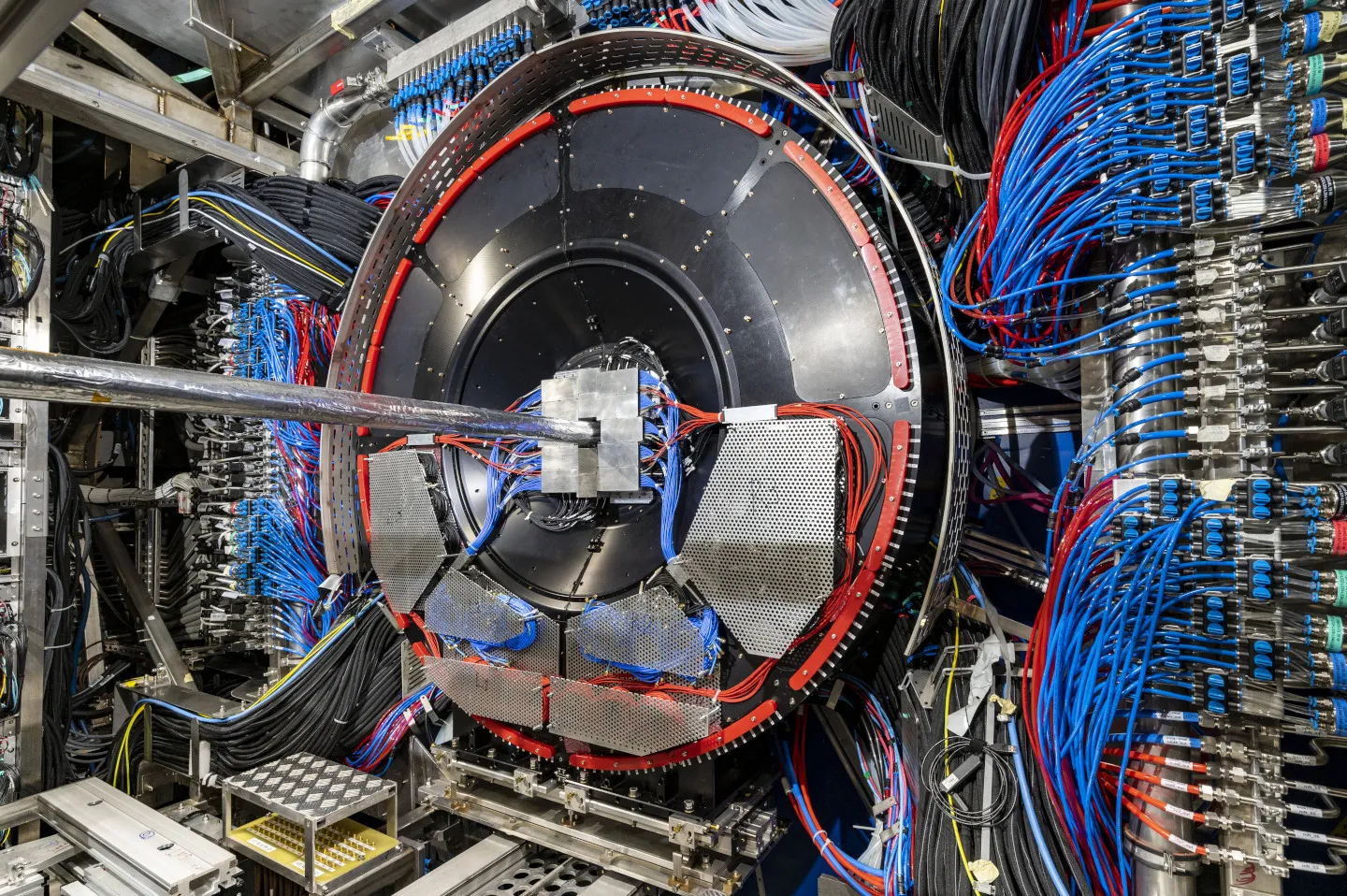
The new ALICE Fast Interaction Trigger
The new ALICE Fast Interaction Trigger To reach Run 3 physics goals, ALICE (A Large Ion Collider Experiment) [1] must collect all minimum-bias data for an interaction rate (i.e., number of collisions each second) of 50 kHz for Pb–Pb and up to 1 MHz for pp collisions. This is two orders of magnitude greater than
-
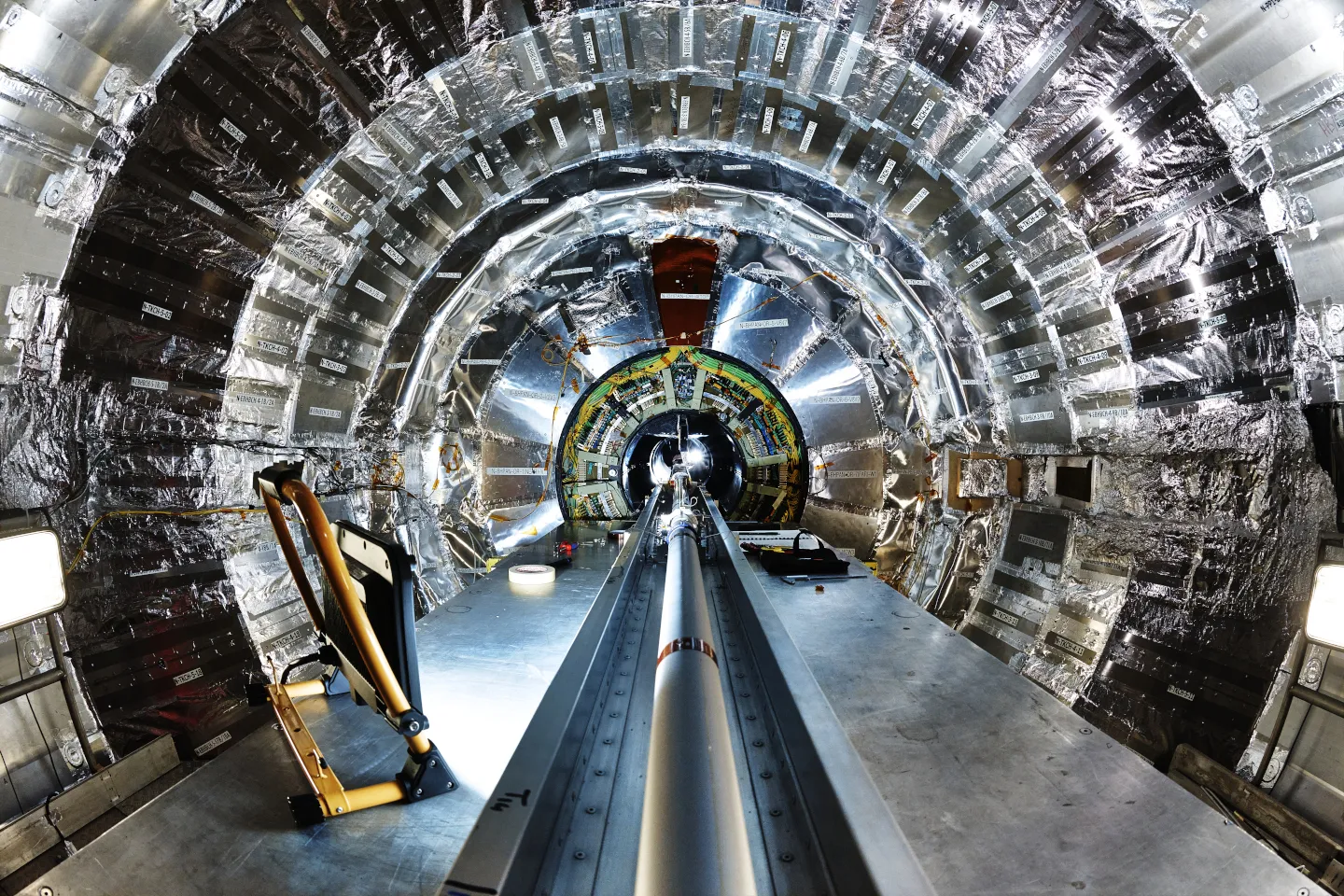
The installation of the beam pipe at the heart of the CMS experiment
The installation of the beam pipe at the heart of the CMS experiment After several years of complex design, manufacture and planning, the CMS collaboration, in tight cooperation with experts of the CERN Technology Department-Vacuum, Surfaces, and Coating group, have been installing the new heart of the detector, the beam pipe, over the last months.
-
FASER Detector Installation
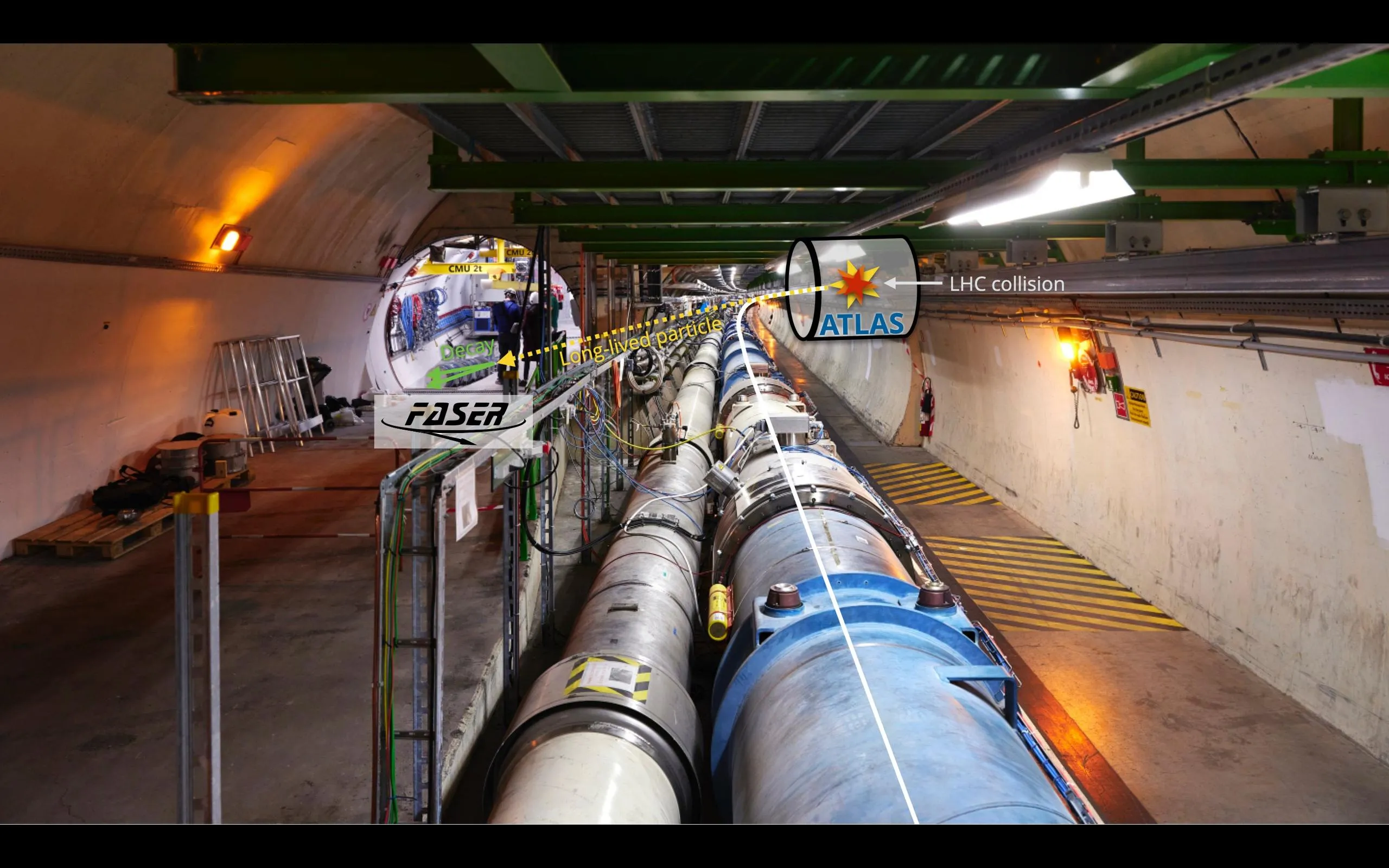
FASER Detector Installation During March the FASER detector was successfully installed into the LHC complex. FASER, a new small LHC experiment, designed to search for light, weakly interacting new particles in the LHC collisions was proposed in 2017, and after review by the LHCC, approved by CERN in March 2019. Since then, the FASER team
-
The commissioning and installation of the new ALICE ITS
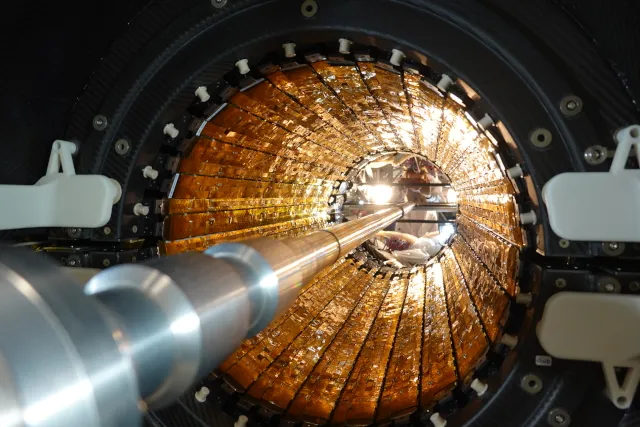
The commissioning and installation of the new ALICE ITS The Inner Tracking System (ITS) is the innermost detector of the ALICE central barrel. It consists of seven cylindrical layers all equipped with Monolithic Active Pixel Sensors (MAPS) named ALPIDE (ALice PIxel DEtector). The ITS allows track ing charged particles of very low transverse momentum at
-
Aligning the ATLAS muon spectrometer
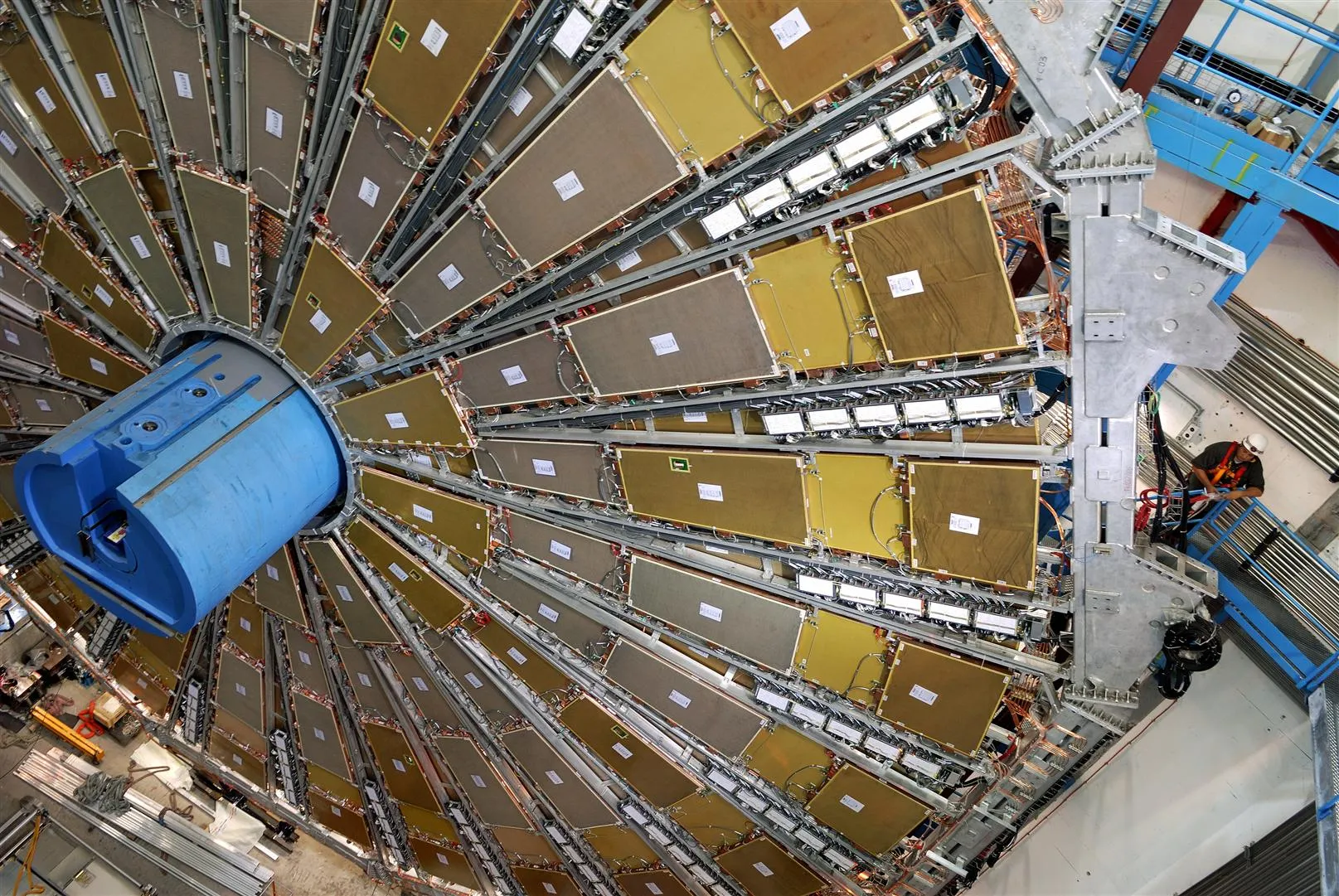
Aligning the ATLAS muon spectrometer If you visit the ATLAS experimental cavern, the first thing you’ll see is the muon spectrometer: several thousand chambers that make up the outermost layer of the experiment (see image above). As muons fly out of the collision point, their tracks curve due to a surrounding toroidal magnetic field. By
-

ISOLDE determines precise nuclear moments by devising novel experimental technique
ISOLDE determines precise nuclear moments by devising novel experimental technique Nuclear quadrupole moments (Q), a measure of charge asymmetry in nuclei, are experimentally accessible via the quadrupole interaction frequency νQ=eQVzz/h. To extract Q from this information one needs to know Vzz, the electric-field gradient at the nuclear site. This must come from theory, to date
-
Designing the SND@LHC experiment
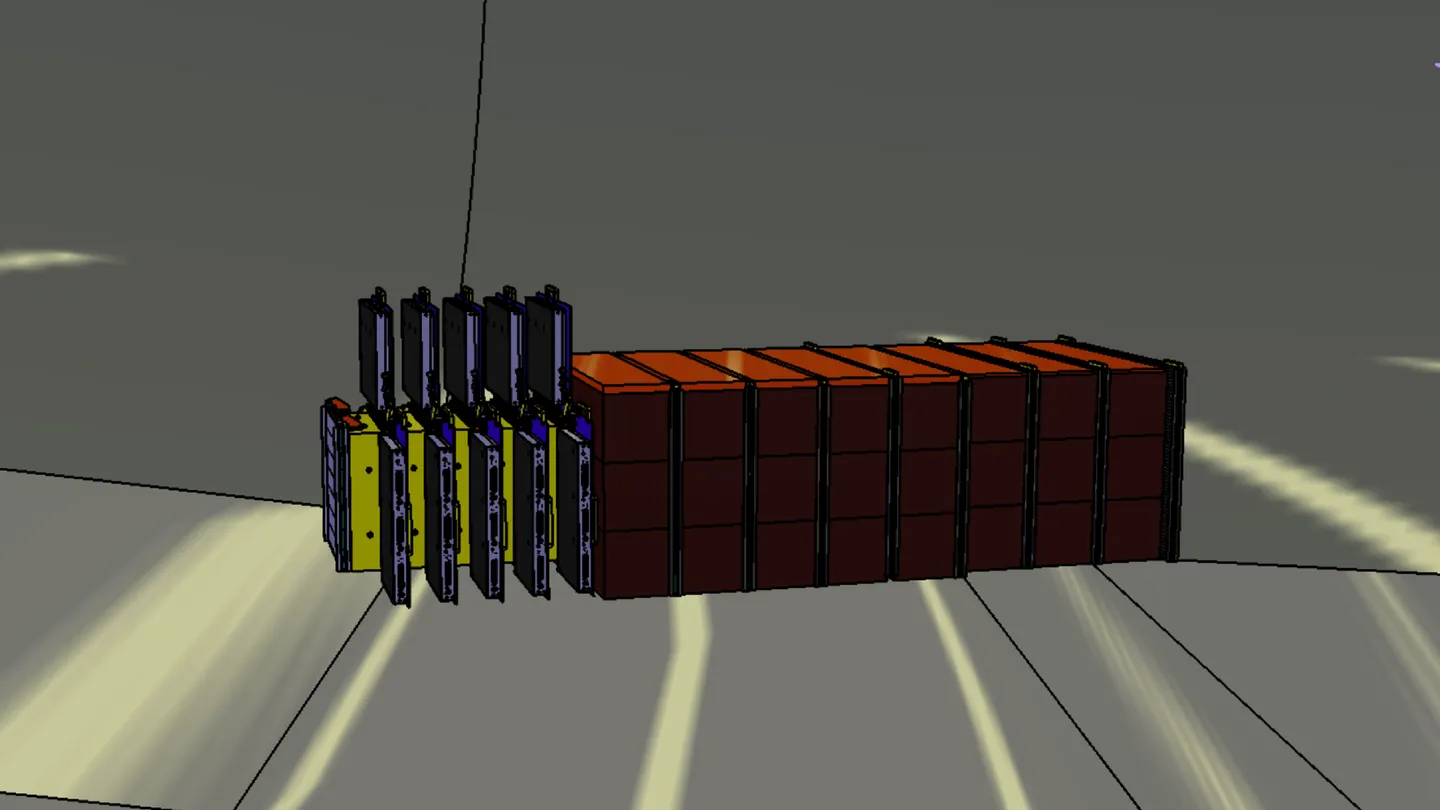
Designing the SND@LHC experiment SND@LHC is a newly proposed, compact and stand-alone experiment to perform measurements with neutrinos produced at the LHC in a hitherto unexplored pseudo-rapidity range of 7.2 < 𝜂 < 8.6, complementary to all the other experiments at the LHC, including FASER. Today, two effects make it possible and particularly interesting to
-
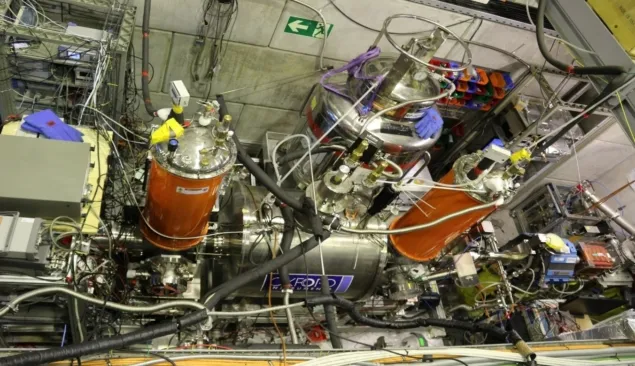
BASE develops a new technique to detect ultralight dark matter.
BASE develops a new technique to detect ultralight dark matter. In a recent work published in Physical Review Letters [1], the Baryon Antibaryon Symmetry Experiment (BASE) at CERN has placed new limits on a possible coupling between photons and hypothetical axionlike dark matter particles with masses between 2.7906-2.7914 neV. We evaluated the signals from our